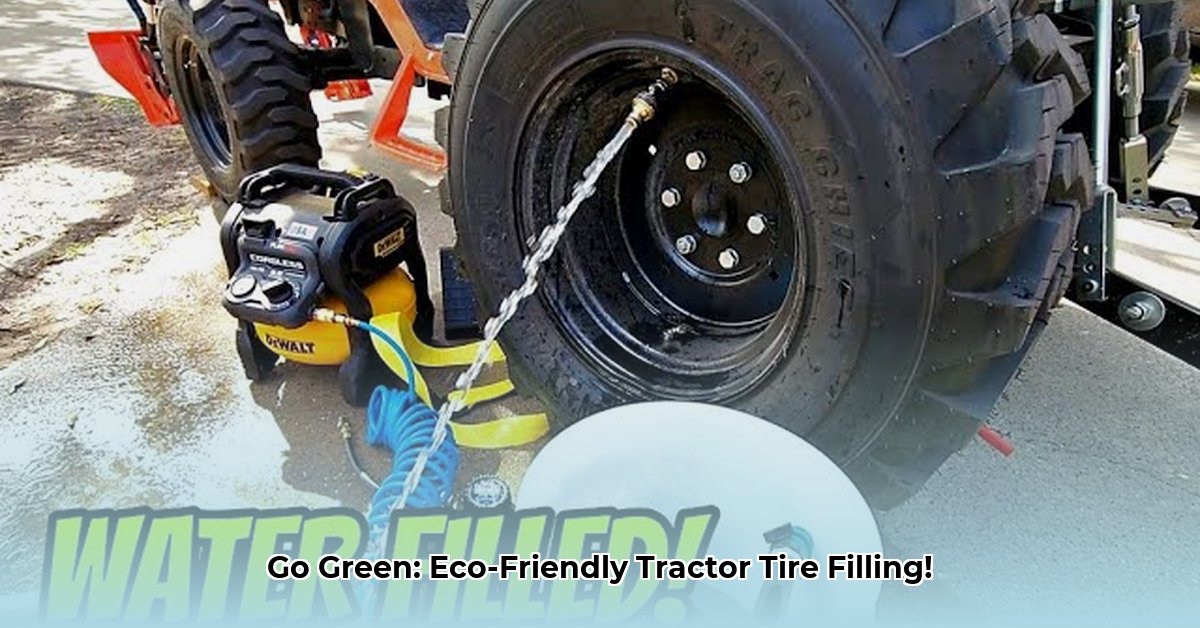
Choosing the right liquid ballast for your tractor tires is crucial for both operational efficiency and environmental sustainability. This guide helps you navigate the options, weighing cost, environmental impact, and performance to make the best decision for your farm. For more detailed instructions, see our guide on filling tractor tires.
Understanding Your Ballast Options: A Comparative Guide
Several options exist for filling tractor tires, each with its own set of advantages and disadvantages. Let's examine the most common choices:
Water: The Budget-Friendly Choice (But With Caveats)
Water is the cheapest and most readily available option. Its simplicity is attractive, but its major drawback is its susceptibility to freezing. In colder climates, freezing water expands, potentially causing significant tire damage. This limits its use to regions with consistently mild winters. Is your farm located in an area with freezing temperatures? If so, water is unlikely to be a viable long-term solution.
Antifreeze: Performance vs. Environmental Impact
Antifreeze solutions, utilizing either ethylene glycol (EG) or propylene glycol (PG), prevent freezing. However, both contain chemicals toxic to the environment and harmful to wildlife. Leaks contaminate soil and groundwater, resulting in long-term environmental damage. While PG is less toxic than EG, neither represents an environmentally sound choice. The potential for environmental harm and associated disposal costs must be carefully considered. Does the operational advantage outweigh the environmental risk and additional expenses associated with responsible handling and disposal?
Calcium Chloride: Extreme Cold, Extreme Caution
Calcium chloride boasts an extremely low freezing point, making it suitable for extremely cold climates. However, this comes at a cost. Its highly corrosive nature can damage tire rims and machinery, while its high water solubility poses a significant risk of groundwater contamination. Spills can severely impact soil and water quality, causing long-term environmental harm. The potential for environmental damage necessitates strict handling protocols and responsible disposal practices. Is the benefit of extreme cold tolerance worth the risk of significant environmental damage and potential regulatory penalties?
Beet Juice: A Sustainable Alternative?
Beet juice emerges as a more environmentally friendly alternative. It's biodegradable, offers decent freeze protection, and utilizes a byproduct of the sugar industry, promoting waste reduction. However, its higher cost presents a significant barrier for some farmers. The long-term cost-benefit analysis—considering reduced environmental impact and potential tire wear—requires further investigation. Can your budget accommodate the higher upfront costs, weighed against the long-term environmental and operational benefits?
Windshield Washer Fluid: A Quick Thought, But Proceed With Caution
While readily available and cheap, windshield washer fluid is not recommended. Many formulations contain chemicals harmful to the environment, and its frost-protection capabilities are often insufficient for sustained cold conditions.
Making an Informed Decision: A Step-by-Step Guide
Choosing the appropriate liquid ballast requires careful consideration of your specific circumstances. Follow these steps:
- Assess Your Climate: Identify your region's temperature range. Freezing temperatures eliminate water as an option.
- Define Your Budget: Evaluate the cost of each ballast type against your operational budget.
- Prioritize Environmental Impact: Weigh the potential environmental risks of each option against its operational benefits.
- Understand Local Regulations: Check your local regulations regarding ballast disposal and use.
- Seek Expert Advice: Consult experienced farmers, agricultural professionals, or your local agricultural extension office.
A Comparative Overview: Key Features of Liquid Ballast Options
| Ballast Type | Pros | Cons | Environmental Impact | Cost |
|---|---|---|---|---|
| Water | Cheap, readily available | Freezes easily | Low | Very Low |
| Beet Juice | Biodegradable, environmentally friendly | More expensive | Low | High |
| Antifreeze (EG) | Excellent freeze protection | Highly toxic, harmful to the environment | High | Moderate |
| Antifreeze (PG) | Good freeze protection, less toxic than EG | Still potentially harmful to the environment | Moderate | Moderate |
| Calcium Chloride | Very low freezing point | Highly corrosive, contaminates water and soil | High | Low |
| Windshield Washer | Easily accessible, relatively low cost | May not offer sufficient frost protection, potential toxicity concerns | Moderate | Very Low |
Remember, the optimal choice will depend on your specific needs and priorities. Prioritize both operational efficiency and environmental sustainability. The right decision today contributes to the future of sustainable farming.